
Medically reviewed by Dr. Ehtesham Ghani, Internal Medicine & Bariatric Medicine (ASBP). Last reviewed June 2026.
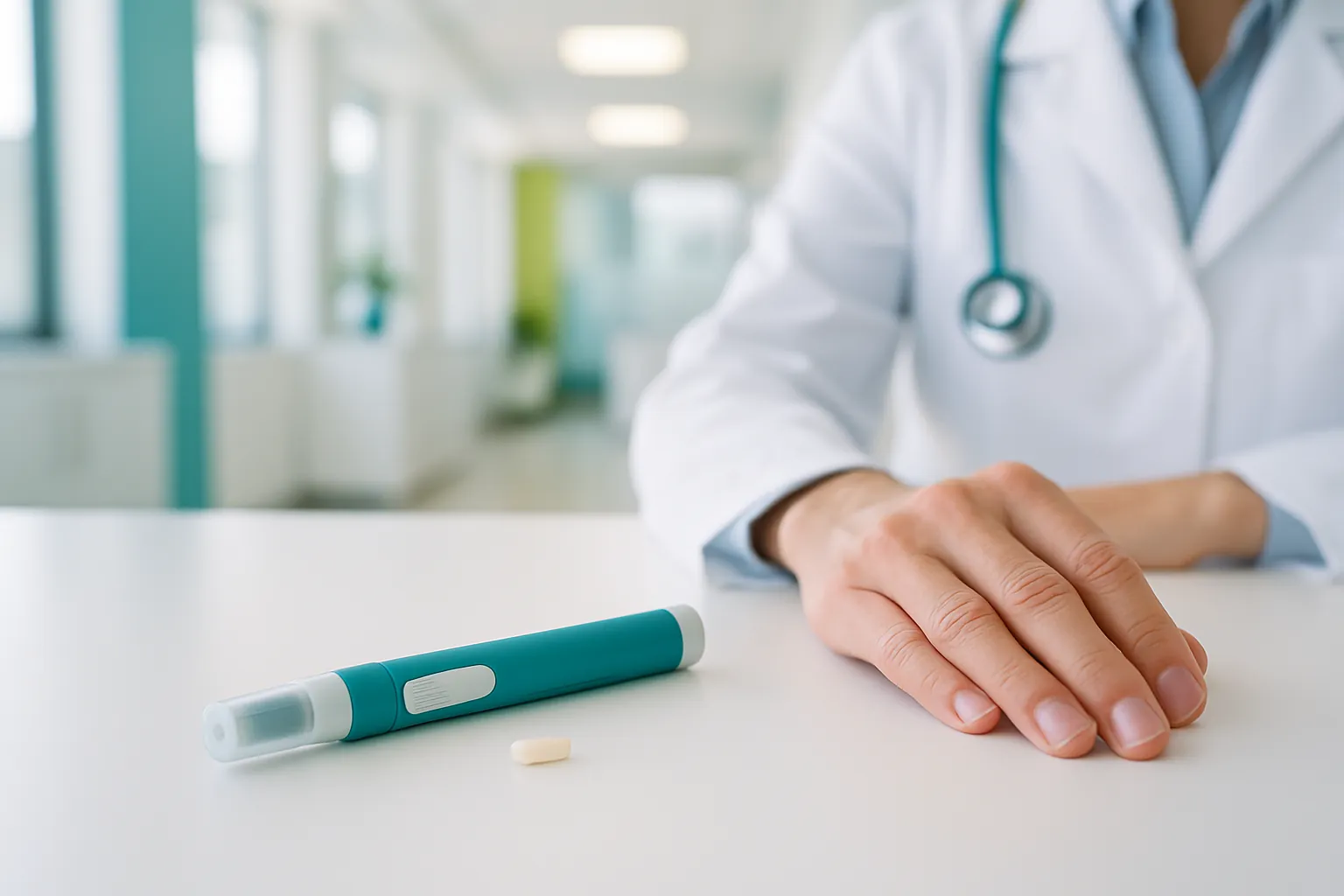
If you are weighing your options for GLP-1 therapy, one of the first questions is whether to take a weekly shot or a daily pill. Both can be effective tools when combined with diet, exercise, and medical supervision, but they differ in how they are taken, how they are dosed, and what the evidence shows. At ThinFast MD, our physicians have guided Illinois patients through medical weight loss since 1984, and we help you choose the option that fits your body, your labs, and your life. Individual results vary, and the right choice is made together with your physician at your in-person exam.
What is the difference between oral and injectable GLP-1 medications?
GLP-1 medications mimic a gut hormone that helps regulate appetite, blood sugar, and how quickly your stomach empties. The two delivery methods are the main practical difference. Injectable GLP-1 medications, such as semaglutide (Wegovy, Ozempic) and tirzepatide (Zepbound, Mounjaro), are self-administered as a once-weekly subcutaneous shot using a small pen needle. Oral GLP-1 medications are swallowed as a daily tablet. The medication inside can be the same molecule, semaglutide, but the way it travels into your body changes the dosing schedule and, in some cases, the absorption. You can read more about each drug class on our glp-1-semaglutide and tirzepatide-weight-loss pages.
Is there an FDA-approved GLP-1 pill for weight loss?
Yes, but the timing matters and the details are frequently confused. On December 22, 2025, the FDA approved an oral form of semaglutide (marketed under the Wegovy brand as a 25 mg once-daily pill) for chronic weight management, making it the first oral GLP-1 cleared specifically for weight loss in adults who meet the prescribing criteria. This is different from Rybelsus, which is also oral semaglutide but is FDA-approved only for type 2 diabetes, not for weight loss. If you have seen Rybelsus described as a weight-loss pill, that is an off-label use, not an approved indication. Our physicians will tell you exactly which product is appropriate and why, based on your diagnosis and your goals.
Which works better, the GLP-1 pill or the injection?
The honest answer is that it depends on the specific medication and the individual, and results always vary. In general, the trade-off is convenience versus dosing flexibility and efficacy. Injectable tirzepatide has produced the largest average weight reductions in clinical trials. In the NEJM SURMOUNT-1 trial (2022), adults without diabetes taking the higher tirzepatide doses lost an average of roughly 21 to 23 percent of body weight over about 72 weeks (about 21.4 percent on the 10 mg dose and 22.5 percent on the 15 mg dose), according to the published results. Injectable semaglutide produced an average of around 15 percent in the NEJM STEP 1 trial (semaglutide 2.4 mg, 2021). For the oral Wegovy pill, the OASIS 4 trial reported an average of about 16.6 percent weight loss with adherence, though head-to-head comparisons depend on dose and the individual. Because oral GLP-1 absorption can be affected by food and timing, the pill requires more disciplined daily habits, while the weekly shot is taken only once a week. These figures are trial averages, not promises, and your own outcome will be guided by your physician and your effort.
Who is a better candidate for a pill versus a shot?
People who are uncomfortable with needles, who travel frequently, or who simply prefer a tablet often gravitate toward the oral option. People who want the simplest routine, once a week and done, or who are seeking the highest average efficacy seen in trials, may prefer an injectable. Your medical history matters too. Conditions such as PCOS, prediabetes or type 2 diabetes, thyroid disorders including Hashimoto’s, and menopause-related weight changes can all influence the safest and most effective choice. This is exactly why we examine the whole picture rather than mailing a one-size-fits-all prescription.
Are oral and injectable GLP-1 medications safe for everyone?
No medication is right for everyone, and GLP-1 medications carry important safety considerations regardless of whether they are taken as a pill or a shot. Per their FDA prescribing information, semaglutide and tirzepatide carry a boxed warning and should not be used by people with a personal or family history of medullary thyroid carcinoma (MTC) or Multiple Endocrine Neoplasia syndrome type 2 (MEN 2). They may also not be appropriate for people with a history of pancreatitis, certain gallbladder or kidney conditions, or specific gastrointestinal disorders. This is one of the most important reasons to be evaluated in person: at ThinFast MD, your physician reviews your personal and family history, your labs, and your overall health before deciding whether a GLP-1 medication is appropriate and which form to use. Always tell your physician about your full medical history and any other medications you take.
Why choose an in-person Illinois clinic over a mail-order GLP-1 service?
GLP-1 medications are powerful, and the choice between oral and injectable should follow a real medical evaluation, not a quick online form. Unlike telehealth-only and mail-order services that may never physically examine you, ThinFast MD performs an in-person history and physical, reviews your labs, checks an EKG when indicated, and assesses your metabolism before prescribing. Our medical director, Dr. Ehtesham Ghani, specializes in Internal Medicine and Bariatric Medicine and is a member of the American Society of Bariatric Physicians. You can be seen at any of our four Illinois locations in Hinsdale, Arlington Heights, Brookfield, and Rockford, with telehealth follow-up available once your in-person workup is complete. Medication is always used together with diet, exercise, and ongoing medical supervision.
What about side effects and cost?
Both oral and injectable GLP-1 medications share a similar side-effect profile, most commonly nausea, reduced appetite, and digestive changes such as diarrhea or vomiting that often ease as the dose is gradually increased. Your physician manages this by titrating slowly and monitoring you over time. As for cost, pricing and insurance coverage vary widely by product, by pharmacy, and by your individual plan, so we review pricing and coverage with you at your consultation rather than quoting a number you cannot rely on. The goal is a plan that is both clinically sound and realistic for you to sustain.
Frequently asked questions
Is the Wegovy pill the same as Rybelsus? No. Both are oral semaglutide, but the Wegovy oral form received FDA approval for chronic weight management on December 22, 2025, while Rybelsus is FDA-approved only for type 2 diabetes. Your physician will confirm which is appropriate for you.
How often do I take each type? Injectable semaglutide and tirzepatide are once-weekly shots. Oral GLP-1 medications are taken daily, and timing relative to food matters for absorption.
Which causes more weight loss on average? In clinical trials, injectable tirzepatide showed the largest average reductions, roughly 21 to 23 percent in NEJM SURMOUNT-1, and injectable semaglutide about 15 percent in NEJM STEP 1. The oral Wegovy pill averaged about 16.6 percent with adherence in the OASIS 4 trial. Individual results vary and depend on diet, exercise, and supervision.
Who should not take a GLP-1 medication? These medications are not for people with a personal or family history of medullary thyroid carcinoma (MTC) or MEN 2 syndrome, and may not be safe with certain pancreatic, gallbladder, kidney, or gastrointestinal conditions. Your physician reviews your full history before prescribing.
Can I switch between the pill and the shot? Sometimes, yes, depending on your response, tolerance, and goals. Any switch should be made with your physician, who will adjust dosing safely.
Do I need an in-person visit to start? At ThinFast MD, yes. We perform an in-person history, physical, labs, and EKG when indicated before prescribing, with telehealth follow-up available afterward. Call (708) 485-4050 to schedule at our Hinsdale, Arlington Heights, Brookfield, or Rockford location.
This page is for educational purposes only and is not medical advice. GLP-1 medications are prescribed only when clinically appropriate after an individualized evaluation, and are used together with diet, exercise, and ongoing medical supervision. Weight-loss figures are clinical trial averages, not guarantees; individual results vary.
Find your nearest ThinFast MD clinic
We serve patients across the Chicago suburbs and Rockford. Choose your nearest location — Hinsdale, Arlington Heights, Brookfield, or Rockford — or call (708) 485-4050 to book. See all service areas.