Weight-Loss Pills vs. Injections in 2026: Foundayo, the Wegovy Pill, and What Actually Works

Short answer

As of 2026 you can take a GLP-1 as a daily pill or a weekly injection. Pills are newer, cheaper and needle-free, but the strongest results still come from an injection: tirzepatide averaged 20.2% body-weight loss in head-to-head trial data, versus 16.6% for the oral semaglutide pill and 12.4% for orforglipron. The right choice depends on your health history, not the headline.

For most of the last decade, “weight-loss medication” meant a weekly injection. That changed twice in the space of four months. In December 2025 the FDA approved a 25 mg oral semaglutide tablet, the first GLP-1 pill indicated for chronic weight management. In spring 2026 it approved orforglipron, sold as Foundayo, the first non-peptide oral GLP-1, which does not carry the fasting and water restrictions that oral peptides require.

The result is that patients walking into our Hinsdale and Arlington Heights clinics now ask a question that did not exist eighteen months ago: should I be on a pill instead of a shot?

This article lays out what the trial data actually shows, what each option costs in 2026, and how our physicians decide between them. It is general information, not a prescription — the honest answer for any individual depends on labs, cardiac history and medication list, which is why we run those before we prescribe anything.

What actually changed in 2026

Two approvals reshaped the category, and a third fact explains why everyone is talking about it.

Oral semaglutide 25 mg (Wegovy tablet) was approved on 22 December 2025 for chronic weight management and cardiovascular risk reduction in adults with obesity, or overweight plus at least one weight-related condition. It is the same molecule as the Wegovy injection, reformulated for daily oral dosing (manufacturer announcement).

Orforglipron (Foundayo) followed in spring 2026. It matters for a structural reason: it is a small-molecule, non-peptide GLP-1 receptor agonist. Peptides are fragile in the stomach, which is why oral semaglutide has to be taken on an empty stomach with a specific small volume of water. Orforglipron does not — it can be taken with or without food and water. It was cleared in roughly 50 days under the FDA’s National Priority Voucher pilot, the fastest new molecular entity approval since 2002.

And the context: about 11% of American adults now report currently taking a GLP-1 medication for weight loss, up from 3% in 2024, according to Gallup polling. This is no longer a niche therapy.

The efficacy question, answered with numbers

Convenience is easy to market. Effectiveness is what patients actually care about. Here is what the trials report.

Average body-weight reduction by medication

20.2% Tirzepatide (inj.) 16.6% Oral semaglutide (pill) 13.7% Semaglutide (inj.) 12.4% Orforglipron (pill) 0% 10% 20%

Sources: SURMOUNT-5 head-to-head (tirzepatide vs. semaglutide injections); OASIS 4 phase 3 (oral semaglutide, 64 weeks, with reduced-calorie diet and exercise); orforglipron 72-week phase 3. Trial populations and durations differ, so these are not perfectly like-for-like comparisons.

The honest read: “pill versus injection” is the wrong frame. The oral semaglutide tablet outperformed the semaglutide injection figure in its own trial, while orforglipron — the most convenient option of all — produced the smallest average loss. Route of delivery does not predict result. The molecule and the dose do.

The three options, side by side

  Tirzepatide (Zepbound) Oral semaglutide (Wegovy pill) Orforglipron (Foundayo)
Form Weekly injection Daily tablet Daily tablet
Mechanism GIP + GLP-1 (dual) GLP-1 (peptide) GLP-1 (non-peptide)
Average weight loss 20.2% 16.6% 12.4%
Food/water rules None Empty stomach, limited water None
Approx. cash price (2026) ~$550/mo ~$299/mo $149–$299/mo
Approved for weight loss Yes Dec 2025 Spring 2026

Prices above are 2026 cash/list figures before insurance and change frequently; treat them as a starting point, not a quote.

A closer look at the Wegovy pill

The approval rested on OASIS 4, a phase 3 trial that followed 307 adults without diabetes for 64 weeks. Participants took a daily tablet titrated over a 12-week escalation phase (available strengths run 1.5 mg, 4 mg, 9 mg and 25 mg) alongside a reduced-calorie diet and increased physical activity.

Average weight loss was 16.6% with the lifestyle programme, roughly 14% attributable to the drug itself, against about 3% on placebo. One in three participants lost 20% or more of their body weight. Notably, serious adverse events were less frequent on the drug than on placebo (3.9% versus 8.8%) — a reassuring signal, though a 307-person trial is not the same evidence base as years of post-market surveillance.

The practical catch is the dosing ritual. Oral peptides degrade in the stomach, so the tablet must be taken on an empty stomach with a small, specified amount of water, and you wait before eating or drinking anything else. Patients who are chaotic in the mornings tend to struggle with this, and a GLP-1 you take inconsistently is a GLP-1 that underperforms.

A closer look at orforglipron

Orforglipron trades peak efficacy for freedom. Because it is not a peptide, there is no empty-stomach rule and no water restriction — you take it like any other daily tablet.

In its 72-week phase 3 programme, participants on the highest dose who stayed on treatment lost an average of 27.3 lb (12.4%), versus 2.2 lb (0.9%) on placebo. Across all treated participants regardless of adherence, the average was 25 lb (11.1%) versus 5.3 lb (2.1%). That gap between “completers” and “everyone” is worth noticing — it is a reminder that these medications only work while you take them.

What each option costs

Approximate monthly cash cost, 2026 (before insurance)

$550 Tirzepatide $299 Wegovy pill $149–299 Orforglipron $0 $275 $550

List/cash prices as reported in 2026, before insurance or manufacturer savings programmes. Commercial insurance can bring costs to a fraction of these figures; coverage for weight-loss indications varies widely by plan.

Cost is where the pills genuinely disrupt things. Orforglipron at the low end of its range is roughly a quarter of brand tirzepatide. For a patient paying cash — which, in Illinois, is a great many patients, because weight-loss indications are inconsistently covered — that difference decides what is realistic to sustain for a year.

Side effects: what to actually expect

Every medication in this class shares a broadly similar side-effect profile, because they all slow gastric emptying and act on appetite signalling. The most common effects are gastrointestinal: nausea, constipation, diarrhoea, reflux and a feeling of fullness that arrives faster than you are used to. For most patients these are worst during dose escalation and settle as the body adapts.

Three things reduce them substantially, and none of them are complicated. Titrate slowly rather than rushing to the top dose. Eat smaller portions, more slowly, and stop at the first sense of fullness rather than the plate being empty. Keep fluid and fibre up, because constipation is the effect patients most often underestimate.

What is worth understanding is that side effects are not simply a nuisance to be endured — they are information. Persistent vomiting, severe abdominal pain radiating to the back, or symptoms that arrive suddenly after months of stability are reasons to contact your clinician the same day, not to push through. Rarer but serious concerns in this class include pancreatitis and gallbladder disease, and there is a boxed warning relating to thyroid C-cell tumours observed in rodents, which is why a personal or family history of medullary thyroid carcinoma or MEN2 rules these medications out.

This is the practical argument for supervised care rather than a mail-order prescription. Somebody has to be available to tell you which symptoms are ordinary adaptation and which are not, and to adjust the dose rather than leaving you to abandon treatment because week three was unpleasant.

Who should not take a GLP-1

These medications are genuinely transformative for the right patient and inappropriate for others. Absolute and relative contraindications include a personal or family history of medullary thyroid carcinoma or Multiple Endocrine Neoplasia syndrome type 2, a history of pancreatitis, active gallbladder disease, severe gastrointestinal motility disorders such as gastroparesis, pregnancy or active attempts to conceive, and a history of an eating disorder, where appetite suppression can be actively harmful.

There are also interactions that matter. Because these drugs slow gastric emptying, they can alter the absorption of oral medications taken alongside them. Patients on insulin or sulfonylureas need those doses reviewed to avoid hypoglycaemia. None of this is exotic — it is ordinary prescribing diligence, and it requires somebody to have your full medication list in front of them.

This is also where our prescription appetite suppressant options and medically supervised meal replacement programme come in. A GLP-1 is not the only route to meaningful weight loss, and for patients who cannot take one, or cannot afford one long term, they are not the end of the conversation.

So which one is right?

There is no universal answer, and any clinic that gives you one without looking at your history is guessing. In our practice the decision usually turns on five things.

1. Your cardiac and medical history

This is first for a reason. GLP-1 medications affect heart rate and gastrointestinal motility, and some patients have contraindications they do not know about. We run an in-office EKG and baseline bloodwork before prescribing, because the safest option on paper is not always the safest option for you.

2. Whether you will actually take it

A weekly injection is one decision per week. A tablet is seven, and in the case of oral semaglutide, seven decisions with a fasting rule attached. Patients who travel, work nights or have unpredictable mornings often do better on the weekly shot despite the needle.

3. Your target

If you and your physician are aiming at a large reduction — typically because of obesity-related conditions such as sleep apnea, fatty liver or type 2 diabetes risk — the dual-agonist injection currently has the strongest data.

4. Needle aversion

It is not a trivial factor. A meaningful number of people will not start an injectable at all. A pill they will take beats an injection they will not.

5. What you can sustain financially

Stopping a GLP-1 generally means regaining weight. Choosing a medication you can afford for twelve months matters more than choosing the one with the best trial number for three.

What none of these options change: every one of them works best alongside protein-adequate nutrition, resistance training to protect lean mass, and regular follow-up. The medication is a tool that makes the behavioural work possible. It does not replace it.

What the first 90 days actually look like

Patients often expect the graph to go straight down from week one. It rarely does, and knowing the real shape of it prevents a lot of unnecessary discouragement.

A typical first 90 days on a GLP-1

Weeks 1–4 Lowest dose. Appetite changes before the scale. Nausea most likely here. Weeks 5–8 Dose steps up. Steady loss usually begins. Protein and training matter. Weeks 9–12 Dose optimised to the lowest effective level. First plateau is normal.

Illustrative pattern based on standard titration schedules and typical clinical course. Individual response varies considerably.

The first month is mostly about tolerance, not weight. You are on a starting dose chosen to minimise side effects, and what most people notice first is not the scale but the quiet: the constant background negotiation with food gets quieter. That is the drug working, even when the number has barely moved.

Weeks five through eight are usually where consistent loss begins, as the dose steps up. This is also the window where what you eat starts to matter disproportionately. Appetite suppression makes it easy to under-eat protein, and under-eating protein while losing weight rapidly is how people lose muscle alongside fat. We push protein targets and resistance training hard here, for that reason.

By the third month the goal shifts from escalation to optimisation — finding the lowest dose that holds your appetite where you need it, rather than automatically climbing to the maximum. Many patients hit their first plateau somewhere around here. It is expected, it is not failure, and it is usually solvable.

How we approach this at ThinfastMD

We have practised medically supervised weight management in Illinois since 1984, which means we have watched several generations of weight-loss drugs arrive with enormous claims. Our approach has not changed with the pills: assess first, prescribe second.

A new patient visit includes a consultation, a physical exam and vitals, an in-office EKG and baseline lab work. That work-up tells us whether a GLP-1 is appropriate at all, whether an appetite suppressant is a better fit, whether a meal-replacement programme would serve you better, and whether something treatable — a thyroid problem, insulin resistance — is contributing to the weight you have been fighting.

Where we see patients

ThinfastMD operates four Illinois clinics, and patients travel to us from across Chicagoland and the Rockford area:

  • Hinsdale — serving Oak Brook, Clarendon Hills, Burr Ridge, Western Springs, Downers Grove, Westmont and Naperville
  • Brookfield — serving Riverside, Berwyn, La Grange and Oak Park
  • Arlington Heights — serving Palatine, Schaumburg, Mount Prospect, Buffalo Grove and Des Plaines
  • Rockford — serving Loves Park, Machesney Park, Cherry Valley and Roscoe

See all four clinics, hours and directions

Not sure which option fits you?

Start with a real medical evaluation, not an online questionnaire.

See our new patient special

Frequently asked questions

Is the weight-loss pill as good as the injection?

Not universally. The oral semaglutide tablet averaged 16.6% body-weight loss in the OASIS 4 trial, which is strong, while orforglipron averaged 12.4%. The tirzepatide injection still leads at 20.2% in head-to-head data. The best option depends on your health history, your adherence pattern and your budget rather than on the form of the medication.

Do I still need bloodwork if I am taking a pill instead of an injection?

Yes. The route of administration does not change the medication’s effects on your body. Baseline labs and an EKG tell your physician whether a GLP-1 is safe for you and give a reference point to monitor against. We include both in our new patient visit.

What happens if I stop taking it?

Most people regain a substantial portion of the weight. These medications treat obesity as a chronic condition, similar to how blood-pressure medication treats hypertension. That is why we plan for maintenance from the start rather than treating it as a short course.

Can I switch from an injection to a pill?

Often yes, but it is not a simple swap. Dosing does not translate one-to-one between molecules, and switching usually means a new titration schedule. It should be done with your prescriber, not by adjusting on your own.

Is compounded semaglutide still an option in 2026?

The rules have tightened considerably. The FDA declared the semaglutide shortage resolved in February 2025, and in April 2026 proposed permanently excluding semaglutide, tirzepatide and liraglutide from the 503B Bulks List. A narrow patient-specific 503A pathway remains, and clinicians at Stanford Medicine have flagged safety concerns with compounded versions. If you are considering compounded medication, ask exactly which pathway your pharmacy is using.

Does insurance cover any of this in Illinois?

Coverage for weight-loss indications is inconsistent and plan-specific. Some commercial plans cover GLP-1s with prior authorisation, many exclude weight-loss indications entirely, and Medicare coverage is limited. Our team will tell you plainly what your plan does and does not cover before you commit to a programme.

Medical disclaimer. This article is general health information and is not medical advice, diagnosis or treatment. Weight-loss medications are not appropriate for everyone and carry risks, including gastrointestinal effects and contraindications in certain cardiac, thyroid and pancreatic conditions. Individual results vary. Trial figures cited reflect specific study populations and protocols and may not predict your outcome. Pricing reflects 2026 reporting and changes frequently. Always consult a qualified clinician before starting, stopping or changing any medication.


Life After GLP-1: A Realistic Maintenance Plan

Medically reviewed by Dr. Ehtesham Ghani, Internal Medicine & Bariatric Medicine (ASBP). Last reviewed June 2026.

You hit your goal on a GLP-1 medication like semaglutide (Wegovy, Ozempic) or tirzepatide (Zepbound, Mounjaro). The scale moved, your clothes fit, and now a quiet question creeps in: what happens when I stop? It’s the right question to ask. Weight loss is only half the story; keeping it off is the other half, and it deserves just as much of a plan. The good news is that “life after GLP-1” is not a cliff. With the right structure, you can protect your progress for the long haul. This is part of our broader guide to weight-loss maintenance, and below we’ll walk through what a realistic plan actually looks like.

Why does weight come back after stopping a GLP-1?

Let’s name the fear directly, because it’s common and it’s valid: many people regain weight after stopping GLP-1 medication. In one well-known study, the STEP 1 trial extension, participants regained about two-thirds of their lost weight in the year after stopping semaglutide. These drugs work in large part by reducing appetite and slowing how quickly your stomach empties, which makes it easier to eat less. When the medication leaves your system, appetite signals tend to return, and without new habits in place, old eating patterns can return with them. This isn’t a personal failure or a sign the medication “didn’t work” — it’s biology. Your body has powerful systems that defend against weight loss. Understanding that regain has a physiological basis is exactly why a deliberate maintenance plan matters so much. Maintenance isn’t an afterthought; it’s a phase of treatment in its own right.

Do I have to stop the medication at all?

Not necessarily, and this is an important point. For many people, obesity is treated as a chronic condition, much like high blood pressure — managed over time rather than “cured” and walked away from. Some patients stay on a GLP-1 long term, sometimes at a lower maintenance dose. Others taper off entirely. The right path depends on your health history, how your body responds, your goals, and a conversation with your physician. There’s no single correct answer, and the decision should be made with medical supervision, never abruptly on your own. At ThinFast MD, this is one of the most important discussions we have with patients who’ve reached their goal weight.

What does tapering off a GLP-1 actually look like?

If you and your physician decide to come off the medication, a gradual taper is usually preferred over stopping cold. Tapering means stepping the dose down over time rather than quitting suddenly, which can help your appetite adjust more gently and give you a window to lean harder into your habits. A taper is not a fixed formula — it’s individualized to how you’re responding, and your provider will monitor you along the way. The key principle is simple: any change to GLP-1 medication should happen under medical guidance, with diet, exercise, and supervision firmly in place to catch any early signs of regain before they snowball.

How should I eat to maintain my results?

Nutrition is the backbone of maintenance. When appetite returns, the structure you built becomes your safety net. A few priorities tend to matter most:

  • Protein first. Adequate protein supports muscle and helps you feel full, which is especially helpful as appetite-suppressing effects fade.
  • Fiber and whole foods. Vegetables, fruits, legumes, and whole grains add volume and slow digestion naturally.
  • Portion awareness. The smaller portions that felt automatic on medication now need conscious attention.
  • Consistency over perfection. A repeatable pattern you can sustain beats a strict plan you abandon in a month.

Our nutrition counseling, along with structured options like OPTIFAST and OptitrimMD meal replacement, can give you a concrete framework rather than vague advice to “eat better.”

What about exercise and daily habits?

Behavior is where maintenance is won or lost. Regular physical activity — especially resistance training to preserve muscle — supports your metabolism and helps offset the appetite changes that come with stopping medication. Just as important are the everyday behaviors: prioritizing sleep, managing stress, planning meals ahead, and weighing yourself regularly so you spot a small upward trend before it becomes a large one. None of this is glamorous, but it’s what turns a temporary result into a durable one. Many patients find that the months on medication were actually the ideal time to build these habits, while appetite was easier to manage.

How much weight should I realistically expect to keep off?

Here’s where honesty matters more than hype. In clinical trials, semaglutide produced average total body weight loss of roughly 15% (STEP program), while tirzepatide produced average reductions in the range of about 15–21% (SURMOUNT program); a head-to-head trial, SURMOUNT-5, found tirzepatide averaged around 20% versus about 14% for semaglutide. Phentermine and appetite suppressants are typically associated with more modest short-term loss, roughly 3–7%. These figures are averages from studies where participants combined medication with diet, exercise, and medical supervision — and individual results vary. There are no guarantees in weight management. What the data does tell us is that results are real and meaningful, and that the support around the medication is what helps them last.

Why does ongoing monitoring matter so much?

Maintenance isn’t a “set it and forget it” phase. Ongoing check-ins with your physician let you track your weight trend, review your nutrition and activity, adjust your plan if regain starts, and decide whether resuming or adjusting medication makes sense. This is exactly the value of physician-supervised care: you’re not navigating it alone. At ThinFast MD, we’ve supported patients through every stage of this journey since 1984, and the maintenance phase is one we take seriously.

Ready to build your maintenance plan?

If you’re approaching your goal weight or already wondering about life after GLP-1, the best time to plan is now — before the medication changes. Our team at our Hinsdale, Arlington Heights, Brookfield, and Rockford locations can help you map out tapering, nutrition, behavior, and monitoring as one connected strategy. Call us at (708) 485-4050 to schedule a consultation and protect the progress you’ve worked so hard for.

This article is for educational purposes only and is not medical advice. GLP-1 medications carry a boxed warning regarding the risk of thyroid C-cell tumors (including medullary thyroid carcinoma and MEN 2). Ozempic and Mounjaro are FDA-approved for type 2 diabetes; their use for weight loss is off-label. Weight-loss results vary by individual, and no outcome is guaranteed. Always consult your physician before starting, changing, or stopping any medication. In a medical emergency, call 911.

Medical Weight Loss vs. Fad Diets: What’s the Difference?

Medically reviewed by Dr. Ehtesham Ghani, Internal Medicine & Bariatric Medicine (ASBP). Last reviewed June 2026.

If you have ever lost weight on a juice cleanse, a 1,000-calorie crash plan, or the latest viral diet only to gain it all back, you already understand the core problem with fad diets: they are built for fast numbers, not for your health or for the long run. Medical weight loss takes a fundamentally different approach. It treats excess weight as a medical condition, supervised by a physician and supported by tools that have been studied in clinical trials. Below, we break down exactly how the two compare, and why the difference matters for change you can sustain.

What exactly is a fad diet?

A fad diet is any eating plan that promises rapid, dramatic weight loss through restrictive rules, often by cutting out entire food groups or slashing calories to unsustainable levels. Think extreme low-carb resets, cabbage-soup weeks, detox teas, or “eat only this one food” challenges. They tend to share a few traits: no medical oversight, no bloodwork, no personalization, and no plan for what happens after the diet ends. Because the restriction is so severe, much of the early weight lost is often water and muscle, not fat, and the weight commonly returns once normal eating resumes. There is also no one screening you for nutrient deficiencies, medication interactions, or underlying conditions that may be driving the weight in the first place.

How is medical weight loss different?

Medical weight loss is a physician-supervised program that starts with you as an individual, not a generic rulebook. At ThinFast MD, where we have helped patients across Illinois since 1984, that means a real medical evaluation: a review of your history, current medications, and goals, plus lab work when appropriate to understand what is happening inside your body. From there, your physician builds an individualized plan that may combine nutrition counseling with structured tools such as our OptitrimMD meal replacement program, prescription medications, or both, always with ongoing follow-up. The goal is not just a smaller number on the scale this month, but sustainable change supported by medical supervision.

Why does medical supervision matter so much?

Supervision is the single biggest dividing line between the two approaches. A fad diet doesn’t know that you take a blood pressure medication, or that your thyroid is sluggish, or that rapid restriction could affect your blood sugar. A physician does. With medical weight loss, your progress is monitored, your plan is adjusted as your body changes, and any side effects are managed promptly. This matters even more when prescription tools are involved. Medications are always used with diet, exercise, and medical supervision, and your physician screens for who is and isn’t a good candidate, which a diet trend can never do.

What prescription weight loss tools are available, and what can they do?

Unlike supplements and detox products, the medications used in medical weight loss have been studied in large clinical trials. Semaglutide (the active ingredient in Wegovy and Ozempic) has been associated with roughly 15% average body weight reduction in the STEP trials, and tirzepatide (Zepbound and Mounjaro) with roughly 15 to 21% in the SURMOUNT program. In the head-to-head SURMOUNT-5 trial, tirzepatide produced about 20% average weight loss compared with about 14% for semaglutide. Phentermine and other appetite suppressants are tools for shorter-term use, typically associated with about 3 to 7% loss. A few honest notes: individual results vary, and these figures come from studies that paired medication with diet and exercise. Wegovy and Zepbound are FDA-approved for chronic weight management, while Ozempic and Mounjaro are FDA-approved for type 2 diabetes and used for weight loss off-label; compounded semaglutide is not FDA-approved. GLP-1 medications such as semaglutide and tirzepatide also carry a boxed warning about the risk of thyroid C-cell tumors (medullary thyroid carcinoma and MEN 2), so they are not appropriate for everyone, and your physician will review your personal and family history with you.

Which approach is more likely to lead to lasting change?

Sustainability is where fad diets consistently fall short. Because they rely on willpower against extreme restriction, they can create a cycle of loss and regain that is discouraging and, over time, hard on your metabolism. Medical weight loss is designed for the opposite outcome. By combining clinically studied tools, nutrition guidance, and regular check-ins, it aims to help you build habits and physiological support that are easier to maintain. We won’t promise you a specific number or a guaranteed result, because no responsible medical provider can. What we can offer is an honest, personalized plan and a team that adjusts it with you over time.

How do I know which option is right for me?

The best way to find out is a consultation, where your medical history, goals, and candidacy for different tools are reviewed in person. ThinFast MD offers physician-supervised programs at four Illinois locations: Hinsdale, Arlington Heights, Brookfield, and Rockford. Our services include compounded and brand semaglutide, tirzepatide, phentermine and appetite suppressants, OPTIFAST and OptitrimMD meal replacement, lipotropic and B12 support, adolescent programs, pre- and post-bariatric support, and nutrition counseling. To learn what a supervised, individualized plan could look like for you, call us at (708) 485-4050.

This article is for educational purposes only and is not medical advice. It is not a substitute for evaluation and treatment by a qualified healthcare provider. Weight-loss results vary from person to person. If you are experiencing a medical emergency, call 911.

Protecting Muscle on Semaglutide: A Protein Guide

Medically reviewed by Dr. Ehtesham Ghani, Internal Medicine & Bariatric Medicine (ASBP). Last reviewed June 2026.

If you are losing weight on semaglutide and feeling great about the number on the scale, there is one part of your body worth protecting along the way: your muscle. When weight comes off quickly, some of it can come from lean tissue rather than fat. The good news is that with the right amount of protein, regular strength work, and medical supervision, you can shift the odds in your favor. At ThinFast MD, our physician-supervised programs are built around healthy, sustainable weight loss, and that means caring about how you lose, not just how much. This guide explains why muscle matters and how to help protect it. To understand how semaglutide fits into a complete plan, see our guide to GLP-1 semaglutide treatment.

Why does weight loss sometimes cost you muscle?

Any time you lose a meaningful amount of weight, whether through diet, surgery, or medication, some of the loss tends to come from lean body mass, not just fat. This is a normal part of how the body responds to eating less. Research on GLP-1 medications shows that a portion of total weight lost can come from lean tissue, which is why clinicians pay close attention to the quality of weight loss, not only the quantity. Encouragingly, studies also suggest overall body composition can still improve as fat mass declines.

Semaglutide works in part because it reduces appetite, which naturally lowers how much you eat. That is exactly what helps the scale move, but it also means you have to be intentional about getting enough of the right nutrients, especially protein, in a smaller volume of food. Rapid weight loss without that intention can leave muscle vulnerable.

Why is protecting muscle worth the effort?

Muscle is more than appearance. It supports your metabolism, helps keep you strong and mobile, and contributes to long-term physical function as you age. Holding onto lean mass while you lose fat is one of the markers of a high-quality weight loss outcome, the kind of result our team aims for with every patient.

Preserving muscle can also support how you feel day to day, from energy to strength during everyday activities. That is why our physician-supervised approach pairs medication with nutrition counseling and practical lifestyle guidance rather than relying on the medication alone.

How much protein should you aim for?

There is no single number that fits everyone, and your ideal target depends on your body weight, age, activity level, and overall health. As a general principle, people losing weight are often encouraged to prioritize protein at every meal so that lean tissue has the building blocks it needs. The exact amount that is right for you should be set with your provider, who can tailor it to your situation.

A few practical habits tend to help:

  • Make protein the first thing you eat at each meal, before appetite fades.
  • Spread protein across the day rather than loading it all into one meal.
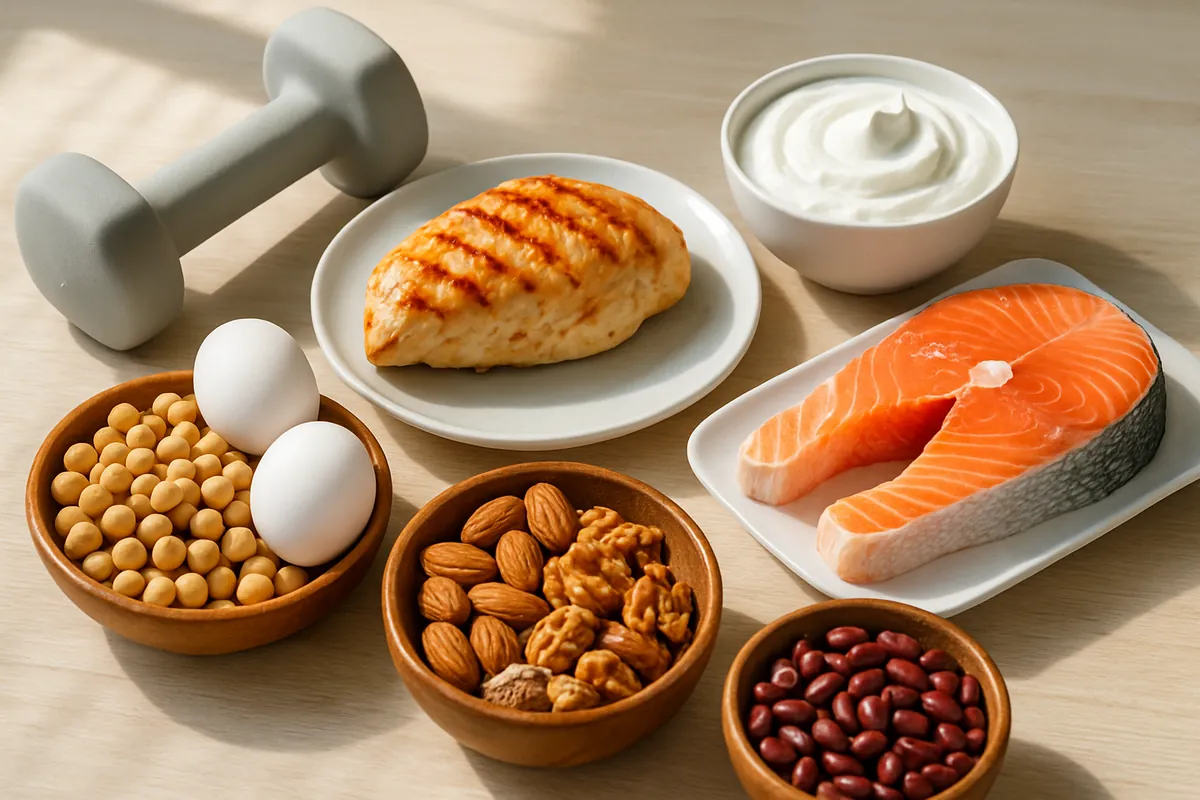
  • Lean on quality sources such as eggs, poultry, fish, Greek yogurt, legumes, and tofu.
  • Consider a protein-forward meal replacement on days when appetite is low. Our OPTIFAST and OptitrimMD options can help here.

This is general guidance, not a meal plan. Your specific targets and food choices are best decided with your ThinFast MD care team during nutrition counseling.

Does exercise really make a difference?

Yes. Protein gives muscle the raw materials, but resistance training is the signal that tells your body to keep that muscle. Research suggests that strength training, more than cardio alone, helps reduce lean mass loss during weight loss. People who combine a GLP-1 medication with regular resistance exercise may be more likely to hold onto muscle than those who rely on the medication by itself.

You do not need an elaborate gym routine to start. Two to three short resistance sessions a week, working the major muscle groups, can go a long way. That might mean bodyweight movements, resistance bands, or weights, whatever fits your fitness level. The key is consistency and gradually challenging your muscles over time. Always check with your provider before beginning a new exercise program, especially if you have other health conditions.

How does medical supervision tie it all together?

Semaglutide is most effective when used with diet, exercise, and medical supervision, not as a standalone fix. That is the model we have followed at ThinFast MD since 1984. Your provider can monitor your progress, adjust your plan, fine-tune your protein and nutrition strategy, and help you build sustainable habits that protect muscle while the fat comes off.

Medical supervision also matters for safety. Like other GLP-1 medications, semaglutide carries a boxed warning based on rodent studies showing thyroid C-cell tumors, and it should not be used by anyone with a personal or family history of medullary thyroid carcinoma (MTC) or Multiple Endocrine Neoplasia syndrome type 2 (MEN 2). Reviewing your full medical history with a physician is part of deciding whether this treatment is appropriate for you.

Individual results vary, and no program can promise a specific outcome. What we can offer is a thoughtful, physician-guided plan designed to help you lose weight in a way that supports your long-term health. To talk through whether semaglutide and a muscle-protecting plan are right for you, call ThinFast MD at (708) 485-4050 to schedule a consultation at our Hinsdale, Arlington Heights, Brookfield, or Rockford location.

This article is for educational purposes only and is not medical advice. Individual results vary. Talk with a qualified healthcare provider before starting any weight-loss medication or exercise program. In a medical emergency, call 911.

Menopause Weight Gain: Why It Happens and What Works

Medically reviewed by Dr. Ehtesham Ghani, Internal Medicine & Bariatric Medicine (ASBP). Last reviewed June 2026.

If the scale started creeping up around your midsection and the routine that used to work suddenly does not, you are not imagining it and you are not doing anything wrong. Weight gain during the menopause transition is real, it is largely driven by biology, and it responds to a different approach than the one that worked in your 30s. At ThinFast MD, we build that approach around your body chemistry, not willpower. This guide explains why it happens and what genuinely helps. For our full clinical overview, see our menopause weight loss resource.

Why does menopause cause weight gain?

The short answer is hormones, and the changes they set in motion. As estrogen declines, several things shift at once. Fat that once settled on the hips and thighs starts collecting around the abdomen and the organs, a pattern called visceral fat. Lean muscle mass naturally declines with age, and because muscle burns more calories at rest than fat does, losing it quietly lowers your daily calorie burn. Appetite-regulating signals can shift too, especially when sleep is disrupted, leaving you hungrier and less satisfied. None of this is a character flaw. It is a coordinated set of metabolic changes, and understanding it is the first step to working with your body instead of against it.

Is it really hormones, or am I just eating more?

For most women, it is genuinely the hormonal and metabolic shift, not a sudden lack of discipline. Research on the menopause transition consistently shows changes in how the body stores and burns fat that are independent of how much someone eats. Resting metabolism tends to ease downward, fat distribution moves toward the middle, and the body becomes more inclined to hold on to weight. That is also why the old advice to simply eat less and move more often falls short here. It is not wrong, it is just incomplete, because it ignores the muscle loss and metabolic changes happening underneath.

Why does the same diet and exercise stop working after 50?

Two reasons. First, if a program causes you to lose weight too quickly or without enough protein and resistance training, a meaningful share of that loss can come from muscle, which lowers your metabolism further and makes regain easier. Second, plans that worked when your hormones were different may not match your body now. The goal after 50 is not just to lose weight, it is to lose fat while protecting muscle. That is the difference between a number on the scale that drops and then rebounds, and a result you can actually keep.

What actually works for menopause weight gain?

A muscle-preserving, medically supervised plan is what works most reliably for women navigating this stage. The foundation is protein-forward, nutrient-dense eating combined with resistance training to defend lean mass, supported by a clinical team that adjusts as your body responds. From there, several supervised tools may be appropriate depending on your health history and goals:

  • GLP-1 medications (semaglutide and tirzepatide). Used with diet, exercise, and medical supervision, these can support appetite control and meaningful fat loss. In clinical trials conducted in the general population with overweight or obesity (not specifically in menopausal women), semaglutide produced roughly 15% average body weight reduction (STEP), and tirzepatide produced roughly 15 to 21% (SURMOUNT), with the SURMOUNT-5 head-to-head showing about 20% versus about 14%. Individual results vary. These medicines carry a boxed warning for thyroid C-cell tumors and should not be used by people with a personal or family history of medullary thyroid carcinoma (MTC) or multiple endocrine neoplasia syndrome type 2 (MEN2). Note that Ozempic and Mounjaro are approved for type 2 diabetes; their use for weight loss is off-label.
  • Phentermine and appetite suppressants. A short-term option associated with roughly 3 to 7% weight loss in studies, used with diet, exercise, and supervision. Individual results vary.
  • Structured meal replacement (OPTIFAST / OptitrimMD). Helps standardize nutrition and protein intake while you rebuild eating habits.
  • Lipotropic / B12 support and nutrition counseling. Complementary tools tailored to your needs.

The right combination is individualized. That is the whole point of supervised care: your plan is matched to your hormones, health history, medications, and goals, then refined over time.

How is treatment different for women over 50?

It is built around protecting muscle while losing fat, and around your specific health picture. For women over 50, that means adequate protein, resistance training, a sensible rate of loss, and medical oversight of any medications alongside the conditions and prescriptions common at this stage. Our medical director, Dr. Ehtesham Ghani, and the ThinFast MD team have supported patients through this transition since 1984 across our four Illinois locations in Hinsdale, Arlington Heights, Brookfield, and Rockford. There are no guarantees, and weight loss is always framed as part of a broader plan of diet, exercise, and medical supervision, but the right plan can make a real, durable difference.

What is the next step?

If menopause weight gain has you frustrated, a consultation is the place to start. We will review your history, talk through which supervised options fit you, and build a plan designed for your body now, not the one you had two decades ago. Call ThinFast MD at (708) 485-4050 to schedule. Specifics, including any costs, are reviewed together at your consultation.

This article is for educational purposes only and is not a substitute for individualized medical advice. Weight-loss results vary from person to person. Talk with a qualified clinician before starting any treatment. In a medical emergency, call 911.

PCOS and Insulin Resistance: How Weight Loss Helps

Medically reviewed by Dr. Ehtesham Ghani, Internal Medicine & Bariatric Medicine (ASBP). Last reviewed June 2026.

If you live with polycystic ovary syndrome (PCOS), you have probably heard that losing weight could help. It is true, but the reason is more interesting than a number on the scale. For most women with PCOS, the real driver is insulin resistance, and addressing it can ripple out to your cycles, your energy, and your long-term health. At ThinFast MD, we have helped patients across Illinois work through this since 1984, always with a physician guiding the plan. Here is what the science actually says.

For a fuller overview of treatment options, see our pillar guide on PCOS and medical weight loss.

What does insulin resistance have to do with PCOS?

Insulin is the hormone that helps your body move sugar from the bloodstream into cells for energy. In insulin resistance, cells respond poorly, so the body produces more and more insulin to compensate. A large share of women with PCOS have some degree of insulin resistance, regardless of body size.

Those high insulin levels are not harmless background noise. Excess insulin can prompt the ovaries to make more androgens (male-pattern hormones), which contributes to irregular periods, acne, and unwanted hair growth. It can also make weight harder to lose, creating a frustrating loop. Understanding this connection is the first step, because it explains why treatment focuses on the metabolic picture, not just calories.

How much weight loss actually makes a difference?

This is the most encouraging part. You do not need a dramatic transformation to see meaningful change. Research and clinical guidelines consistently point to modest weight loss in the range of 5 to 10 percent of body weight as a threshold that can improve insulin sensitivity and help restore more regular menstrual cycles in many women with PCOS.

To put that in perspective, a person weighing 200 pounds is looking at roughly 10 to 20 pounds. That is a realistic, sustainable goal, and it is one reason we emphasize steady progress over extremes. Individual results vary, and weight loss is one piece of a broader plan that includes diet, exercise, and medical supervision. But the takeaway is real: small, consistent change can shift the underlying metabolism that PCOS depends on.

Which medications are used for PCOS and insulin resistance?

Lifestyle change is the foundation, but several medications can support it under a physician’s care. Metformin is a long-standing option that improves how the body uses insulin and is frequently prescribed in PCOS management. It is not a weight-loss drug by itself, but by addressing insulin resistance it can be a useful part of the strategy.

Incretin-based medications such as semaglutide (Wegovy, Ozempic), a GLP-1 receptor agonist, and tirzepatide (Zepbound, Mounjaro), a dual GIP/GLP-1 agonist, have also become important tools. In their weight-loss trials, semaglutide produced average reductions around 15 percent of body weight (STEP program), while tirzepatide showed roughly 15 to 21 percent across the SURMOUNT studies, with the head-to-head SURMOUNT-5 trial reporting about 20 percent versus about 14 percent for semaglutide. These medicines work best with diet, exercise, and medical supervision, and individual results vary.

A few important notes: Ozempic and Mounjaro are approved to treat type 2 diabetes, and their use for weight loss is considered off-label. These medications also carry a boxed warning regarding a risk of thyroid C-cell tumors (medullary thyroid carcinoma and MEN2), which is why a physician reviews your full history before prescribing. For some patients, phentermine and other appetite suppressants are options too, with short-term studies showing roughly 3 to 7 percent weight reduction. We never quote a price online because the right plan, and its cost, is determined at your consultation.

Will losing weight cure my PCOS?

It is important to be honest here: weight loss is not a cure for PCOS. PCOS is a chronic condition, and there is no single treatment that makes it disappear. What weight loss and improved insulin sensitivity can do is help manage symptoms, support more regular cycles, and lower some longer-term metabolic risks. Many women find that their symptoms become more manageable, but ongoing care remains part of the picture.

That framing matters because it sets realistic expectations. The goal is not perfection or a permanent fix. The goal is meaningful, sustainable improvement that you can maintain with the right support.

What does a supervised PCOS plan look like at ThinFast MD?

Because PCOS sits at the intersection of hormones, metabolism, and weight, it benefits from a physician-led approach rather than a one-size-fits-all program. At our four Illinois locations in Hinsdale, Arlington Heights, Brookfield, and Rockford, a typical plan starts with a thorough evaluation of your history and goals. From there, your physician may combine nutrition counseling, an activity plan, and, where appropriate, medication such as metformin or a GLP-1, all monitored over time.

We also offer structured tools like OPTIFAST and OptitrimMD meal replacement and lipotropic/B12 support that can fit into a broader strategy. The point of supervision is simple: your plan adapts to how your body responds, and a medical team is there to adjust safely.

If you are ready to take a focused, physician-supervised step toward managing PCOS and insulin resistance, our team is here to help. Call ThinFast MD at (708) 485-4050 to schedule a consultation and talk through what a personalized plan could look like for you.

This article is for educational purposes only and is not medical advice. Weight-loss results vary from person to person and depend on individual factors. Always consult a qualified healthcare provider before starting any treatment. In an emergency, call 911.

How to Manage GLP-1 Nausea and Side Effects

Medically reviewed by Dr. Ehtesham Ghani, Internal Medicine & Bariatric Medicine (ASBP). Last reviewed June 2026.

If you have just started a GLP-1 medication like semaglutide (Wegovy, Ozempic) or tirzepatide (Zepbound, Mounjaro), you may be wondering whether the queasy stomach is normal and what you can do about it. The short answer is that the most common side effects are usually mild, temporary, and manageable, especially when you and your physician work through them together. At ThinFast MD, we have guided patients through this adjustment period since 1984, and a few simple habits make a real difference. For the bigger picture, see our pillar guide on GLP-1 side effect management.

Why do GLP-1 medications cause nausea in the first place?

GLP-1 medications work in part by slowing how quickly your stomach empties and by changing appetite signals in the brain. That is exactly what helps you feel full and eat less, but it can also leave you feeling queasy, especially in the early weeks or right after a dose increase. Nausea is the most frequently reported side effect, and other gastrointestinal (GI) effects such as constipation, diarrhea, indigestion, or burping can show up too. The good news: for most people these are temporary and tend to ease as the body adapts over the first several weeks. These medications are intended to work alongside diet, exercise, and medical supervision, not on their own.

How long do GLP-1 side effects usually last?

Most GI side effects are concentrated in the first few weeks of treatment and around each step up in dose. Many patients notice the strongest symptoms early on, then steady improvement as their system adjusts. Everyone is different, so individual results vary, and some people are more sensitive than others. The key is to stay in touch with your care team rather than pushing through symptoms alone. If side effects are interfering with your daily life, that is a signal to call us so we can adjust the plan.

What is the most effective way to reduce GLP-1 nausea?

Slow, steady dose titration is the single most important tool. We follow a “start low, go slow” approach, increasing your dose gradually so your body has time to adapt at each step. This is one reason self-adjusting your dose or rushing the schedule is never a good idea. Beyond titration, these everyday habits help most patients:

  • Eat smaller, more frequent meals. Large portions can overwhelm a stomach that is already emptying slowly.
  • Stay hydrated, between meals rather than during them. Sipping water through the day supports digestion and helps with constipation.
  • Go easy on greasy, fried, and very rich foods. High-fat meals take longer to digest and can worsen queasiness.
  • Stop eating when you feel full. GLP-1 medications make fullness arrive sooner, so listen to that signal.
  • Favor bland, simple foods on rough days. Think toast, rice, broth, or crackers until things settle.

These small adjustments, paired with the right titration pace, help ease nausea for many patients. If they are not enough for you, your physician can review your plan and discuss additional options.

What about constipation, fatigue, and other common effects?

Constipation is common and usually responds well to more fluids, more fiber, and regular movement; your physician can recommend a gentle stool softener if needed. Diarrhea tends to ease with bland foods and hydration. Some patients report fatigue early on, which often improves as appetite, meals, and hydration stabilize. Because GLP-1 medications reduce how much you eat, getting enough protein and staying well hydrated becomes especially important, both for how you feel day to day and for protecting muscle as you lose weight. Our nutrition counseling team can build a simple eating plan around your medication.

When are GLP-1 side effects serious enough to call a doctor?

While most side effects are mild, rarer but more serious risks do exist and deserve attention. These include pancreatitis (inflammation of the pancreas) and gallbladder problems. Call your physician promptly if you have severe or persistent abdominal pain, especially pain that radiates to your back, or pain that comes with vomiting; severe or lasting vomiting or diarrhea that may cause dehydration; or signs of gallbladder trouble such as upper-right abdominal pain, fever, or yellowing of the skin or eyes. This class of medication also carries a boxed warning regarding a risk of thyroid C-cell tumors (medullary thyroid carcinoma); GLP-1 medications are not recommended for people with a personal or family history of medullary thyroid cancer or Multiple Endocrine Neoplasia syndrome type 2 (MEN2), and you should tell your physician if you ever notice a lump or swelling in your neck. This is exactly why physician monitoring matters and why these medications should always be used under medical supervision. For any medical emergency, call 911.

How does ThinFast MD help you manage side effects?

Physician supervision is the difference between guessing and a guided plan. At ThinFast MD, Dr. Ehtesham Ghani and our team personalize your titration schedule, monitor how you are responding, and adjust your dose or approach when side effects get in the way. We offer compounded and brand semaglutide and tirzepatide alongside nutrition counseling and other supportive options, all coordinated around your goals and your comfort. Keep in mind that Ozempic and Mounjaro are FDA-approved to treat type 2 diabetes and their use for weight loss is off-label, while Wegovy and Zepbound are FDA-approved for chronic weight management; your physician will discuss what fits your situation. With four Illinois locations in Hinsdale, Arlington Heights, Brookfield, and Rockford, help is close by. If side effects are wearing you down, do not tough it out alone, call us at (708) 485-4050 to talk through your options.

This article is for educational purposes only and is not medical advice. It is not a substitute for diagnosis or treatment by a qualified healthcare provider. Individual results vary, and no specific outcome is guaranteed. Always talk with your physician before starting, stopping, or changing any medication. In a medical emergency, call 911.

Do I Qualify for Medical Weight Loss?

Medically reviewed by Dr. Ehtesham Ghani, Internal Medicine & Bariatric Medicine (ASBP). Last reviewed June 2026.

If you have tried to lose weight on your own and the scale keeps drifting back up, you may be wondering whether you are a candidate for medically supervised help. The good news is that qualifying for medical weight loss is more straightforward than most people expect, and it is based on clear, objective health criteria rather than guesswork. Below, we walk through the standards physicians use, who tends to qualify, and what the evaluation actually involves. For a deeper look at one specific path, see our pillar guide on whether you qualify for weight-loss medication.

What BMI do I need to qualify for medical weight loss?

The most common starting point is body mass index, or BMI. In general, you may qualify for a medically supervised weight-loss program if your BMI is 30 or higher (the clinical threshold for obesity). You may also qualify with a BMI of 27 or higher if you have at least one weight-related health condition, such as type 2 diabetes, high blood pressure, high cholesterol, or obstructive sleep apnea. BMI is a useful screening tool, but it is not the whole story. At ThinFast MD, our physicians look at the full picture: your body composition, your medical history, your medications, and your personal goals all factor into the decision.

What weight-related health conditions count?

If your BMI falls in the 27 to 29.9 range, a related condition can make you eligible. The conditions physicians most often consider include type 2 diabetes or prediabetes, hypertension (high blood pressure), high cholesterol or triglycerides, obstructive sleep apnea, fatty liver disease, and joint problems aggravated by excess weight. Carrying extra weight tends to make each of these harder to manage, which is exactly why a structured, supervised approach can help. During your evaluation, our team reviews your records and lab work to confirm which conditions apply to you.

Do I have to take medication to qualify?

No. Medical weight loss is a broad category, and medication is only one tool within it. Many patients qualify for and benefit from nutrition counseling, structured meal replacement programs like OPTIFAST and OptitrimMD, and lipotropic or B12 support, all under physician supervision. Others are better suited to prescription options such as semaglutide (Wegovy, Ozempic), tirzepatide (Zepbound, Mounjaro), or phentermine and other appetite suppressants. The right plan depends on your health profile, not a one-size-fits-all rule. Every medication is used together with diet, exercise, and ongoing medical supervision, never on its own.

What kind of results can qualified patients expect?

Results vary from person to person, and no program can guarantee an outcome. That said, clinical trials give us useful ranges. In the STEP trials, adults using semaglutide alongside lifestyle changes lost roughly 15% of their body weight on average. In the SURMOUNT trials, tirzepatide produced average reductions in the range of about 16% to 21% depending on dose; in the head-to-head SURMOUNT-5 trial, tirzepatide averaged about 20% versus about 14% for semaglutide. Phentermine and similar appetite suppressants are typically used short-term and are associated with smaller losses, roughly 3% to 7%. These figures reflect study averages with diet, exercise, and medical supervision; individual results vary.

Are there reasons I might not qualify?

Yes, and this is exactly why a medical evaluation is required before starting any program. GLP-1 medications such as semaglutide and tirzepatide carry a boxed warning and are not appropriate for people with a personal or family history of medullary thyroid carcinoma (MTC) or multiple endocrine neoplasia syndrome type 2 (MEN2). Phentermine and stimulant-type appetite suppressants may not be suitable for people with certain cardiovascular conditions, uncontrolled high blood pressure, or a history of heart disease. It is also worth noting that Ozempic and Mounjaro are FDA-approved to treat type 2 diabetes; their use specifically for weight loss is off-label and a decision your physician makes with you. Your safety drives every recommendation, which is why we never prescribe without a thorough review first.

What happens during the qualifying evaluation?

The evaluation is a conversation as much as an exam. Your ThinFast MD physician reviews your health history, current medications, and goals; measures your BMI and relevant vitals; and may order or review lab work. From there, you and your provider build a plan together, whether that is medication, meal replacement, nutrition counseling, or a combination. We also support specialized situations, including adolescent weight management and pre- and post-bariatric care. There is no obligation to commit to anything during the consultation; the goal is simply to find out what is safe and effective for you.

How do I find out if I qualify?

The fastest way to get a clear answer is to talk with our team. ThinFast MD has provided physician-supervised medical weight loss since 1984, with locations in Hinsdale, Arlington Heights, Brookfield, and Rockford. Call us at (708) 485-4050 to schedule a consultation, and we will help you understand your options based on your health, not a generic checklist.

This article is for educational purposes only and is not medical advice. Individual results vary, and no outcome is guaranteed. Always consult a qualified healthcare provider before starting any weight-loss program or medication. If you are experiencing a medical emergency, call 911.

Do You Regain Weight After Stopping GLP-1 Medication?

Medically reviewed by Dr. Ehtesham Ghani, Internal Medicine & Bariatric Medicine (ASBP). Last reviewed June 2026.

It is one of the most common questions we hear at ThinFast MD: “If these medications work so well, what happens when I stop taking them?” It is a smart question to ask, and the honest answer is that for many people, some weight does come back without a deliberate plan. The good news is that this is not inevitable, and understanding why it happens is the first step to protecting the progress you have worked so hard for. Building a long-term weight-loss maintenance strategy is what separates a temporary result from a lasting one.

Why does weight come back after stopping a GLP-1?

GLP-1 and dual GLP-1/GIP medications such as semaglutide (Wegovy, Ozempic) and tirzepatide (Zepbound, Mounjaro) work in large part by quieting appetite and slowing how quickly your stomach empties, so you feel full sooner and longer. Used with diet, exercise, and medical supervision, they help reduce the constant “food noise” that drives overeating. When the medication is stopped, those biological signals gradually return to where they were before. Appetite often increases again, and the body’s tendency to defend a higher weight set point can reassert itself. In other words, the medication was managing an underlying condition rather than curing it, much like blood pressure or cholesterol medication. Keep in mind that Ozempic and Mounjaro are FDA-approved to treat type 2 diabetes, and their use for weight loss is off-label.

What do the clinical trials actually show?

Research gives us a clear, sobering picture. In a semaglutide withdrawal extension of the STEP program, participants who stopped the medication regained a substantial portion of the weight they had lost over the following year, while those who continued tended to maintain or keep losing. A similar pattern appeared in SURMOUNT-4, a tirzepatide trial: people who switched to placebo regained much of their lost weight, whereas those who stayed on treatment generally held onto their results.

For context, these medications produce meaningful loss while being taken. Semaglutide showed average reductions of roughly 15% of body weight in STEP trials, and tirzepatide produced averages in the range of about 15% to 21% across SURMOUNT studies, with the head-to-head SURMOUNT-5 trial showing roughly 20% with tirzepatide versus about 14% with semaglutide. Older appetite suppressants like phentermine offer more modest short-term results, often in the range of about 3% to 7%. The key takeaway from the withdrawal data is not that the medications fail, but that stopping abruptly without a maintenance plan tends to undo a meaningful share of the progress. Individual results vary, and these numbers are averages from controlled studies, not promises.

Does everyone regain the weight?

No. The trial averages describe groups, not individuals, and your own outcome depends heavily on what you do during and after treatment. People who use their time on medication to build durable habits, including consistent protein intake, strength training, sleep, and stress management, are often better positioned to hold their results. The medication can be thought of as a window of opportunity: while appetite is easier to manage, it becomes far more realistic to establish the routines that support a lower weight long term. How much you regain, if any, is influenced by genetics, your starting point, how the medication is tapered, and the support system around you.

How can you keep the weight off long term?

Maintenance is an active strategy, not a finish line. At ThinFast MD, our physician-supervised approach focuses on several proven levers:

  • A structured maintenance plan rather than an abrupt stop, so your body is not left to readjust without support.
  • Possible dose adjustment or a lower maintenance dose for some patients, decided individually with your provider.
  • Nutrition counseling to lock in eating patterns that hold results without the medication doing all the work.
  • Strength and resistance training to preserve lean muscle, which supports metabolism.
  • Regular follow-up so changes are caught early and addressed before they compound.

The decision of whether to continue, taper, or transition off a GLP-1 is a medical one that should be made together with a physician who knows your history. As with any GLP-1 medication, your provider will review relevant safety information, including the boxed warning regarding the risk of thyroid C-cell tumors (MTC) and use in those with a personal or family history of medullary thyroid carcinoma or MEN 2.

What should you do if you are thinking about stopping?

The most important thing is to not stop on your own without a plan. Whether you are pausing because of cost, side effects, supply, or because you have reached your goal, our team can help you map out a transition that protects your results. We tailor maintenance strategies to each patient across our four Illinois locations in Hinsdale, Arlington Heights, Brookfield, and Rockford. If you have questions about what comes after your GLP-1 medication, call ThinFast MD at (708) 485-4050 to schedule a consultation and build a plan designed around your goals.

This article is for educational purposes only and is not medical advice. It is not a substitute for diagnosis or treatment from your physician. Weight-loss results vary from person to person. Always consult a qualified healthcare provider before starting or stopping any medication. In a medical emergency, call 911.

What to Eat on Semaglutide and GLP-1 Medications

Medically reviewed by Dr. Ehtesham Ghani, Internal Medicine & Bariatric Medicine (ASBP). Last reviewed June 2026.

If you have started semaglitude—if you have started semaglutide (Wegovy, Ozempic) or another GLP-1 medication, you have probably noticed your appetite is smaller and you fill up faster than before. That is the medication doing its job. But it also raises a practical question: when you are eating less, how do you make every bite count? The answer comes down to a few simple, repeatable habits. This is general guidance to help you eat well alongside your treatment, not a strict prescription. For the full picture of how these medications work, see our pillar guide to GLP-1 and semaglutide treatment.

Why does what you eat matter more on a GLP-1?

GLP-1 medications work by slowing how quickly your stomach empties and by quieting appetite signals, so you feel satisfied on far less food. The upside is meaningful weight loss when paired with diet, exercise, and medical supervision. In clinical trials, semaglutide produced average total body-weight reductions of about 15% in the STEP program, and tirzepatide showed roughly 15% to 21% across the SURMOUNT studies. Individual results vary. It is worth noting that not every brand is approved for weight loss: Wegovy (semaglutide) and Zepbound (tirzepatide) are FDA-approved for chronic weight management, while Ozempic and Mounjaro are approved for type 2 diabetes and are used for weight loss off-label. The catch is that when total food volume drops, it becomes easy to under-eat the nutrients your body needs most, especially protein. Eating intentionally is how you protect your energy, your muscle, and your results.

How much protein should you aim for?

Protein is the single most important priority. When you lose weight, some of that loss can come from lean muscle rather than fat, and protein is what helps preserve muscle as the scale moves. A common, sensible target is roughly 20 to 30 grams of protein at each meal, though your provider may tailor this to you. Reaching for protein first, before you fill up on everything else, ensures you actually get it in before your appetite taps out.

Good options include:

  • Eggs, Greek yogurt, and cottage cheese
  • Chicken, turkey, fish, and lean cuts of beef or pork
  • Beans, lentils, tofu, and edamame
  • A protein shake or smoothie when solid food feels like too much

If your provider has recommended a structured plan like OPTIFAST or OptitrimMD meal replacement, those products are built to deliver consistent protein when your appetite is low, which can take the guesswork out of hitting your target.

What role does fiber play?

Fiber is your second priority, and it does double duty. It helps steady blood sugar, keeps you feeling full, and supports digestion. That last point matters because constipation is a common complaint on GLP-1 medications, and fiber-rich foods are one of the most effective ways to keep things moving. Build your plate around non-starchy vegetables, whole fruits, leafy greens, whole grains, and legumes. Aim to make vegetables and fruit a visible part of most meals rather than an afterthought.

How much should you be drinking?

Hydration is easy to overlook and surprisingly important. GLP-1 medications can dull your natural thirst cues, and because you are eating less food, you are also getting less of the water that normally comes from meals. Side effects like nausea can add to the risk of dehydration. Make a habit of sipping water throughout the day and with every meal. If plain water gets boring, unsweetened sparkling water, herbal tea, or water with a squeeze of citrus all count. Staying well hydrated also helps reduce headaches and fatigue that some people mistake for the medication itself.

How do you eat when you feel nauseous?

Nausea is one of the more common early side effects, and a few adjustments usually help. Instead of three large meals, try four to six smaller ones spread across the day. Eat slowly and stop when you feel comfortably satisfied rather than full, since overeating on a GLP-1 is a fast track to discomfort. Bland, lower-fat foods tend to sit better than rich, greasy, or heavily fried meals.

When solid food feels unappealing, especially in the morning, a protein smoothie can be far easier to get down, and you can sip it gradually. If nausea is persistent, severe, or paired with vomiting that keeps you from staying hydrated, let your care team know so we can adjust your plan.

What should you limit, and what safety signs matter?

You do not need a long list of forbidden foods, but a few categories tend to cause trouble. Large, high-fat, and fried meals are the most common offenders for nausea and sluggishness. Sugary drinks and refined carbohydrates can spike and crash your energy without offering much nutrition, and on a limited appetite that is space better spent on protein and fiber. Many people also find that alcohol hits harder and sits less comfortably while on these medications, so moderation is wise.

Beyond diet, it is important to know that GLP-1 medications carry an FDA boxed warning for a risk of thyroid C-cell tumors, including medullary thyroid carcinoma (MTC), based on animal studies. They are not recommended for people with a personal or family history of MTC or with multiple endocrine neoplasia syndrome type 2 (MEN 2). These medications should only be used under medical supervision. Seek prompt medical care for symptoms such as a neck lump, trouble swallowing, severe or persistent abdominal pain (a possible sign of pancreatitis), or signs of an allergic reaction.

Putting it together

The eating pattern that works best on a GLP-1 is refreshingly simple: protein first, fiber second, hydration always, and smaller meals to keep symptoms in check. These habits help you preserve muscle, feel steadier through the day, and get the most from your treatment, which is always meant to work alongside diet, exercise, and medical supervision. Your nutrition needs are personal, and your plan should reflect them. At ThinFast MD, our team builds individualized nutrition counseling and medication plans around your goals. To get started or ask a question, call us at (708) 485-4050.

This article is for educational purposes only and is not medical advice. Weight-loss results vary from person to person. Always consult a qualified healthcare provider before starting, stopping, or changing any medication or nutrition plan. If you are experiencing a medical emergency, call 911.

📞 Call Now Book a Visit